
A Structured Clinical Approach to Nail Infections
Fungal nail infections are stubborn.
Many people try pharmacy treatments again and again, only to see the nail improve slightly… then return to how it was before.
Thick nails. Yellowing. Crumbling edges.
Difficulty wearing certain shoes.
Embarrassment in sandals.
If this sounds familiar, you are not alone.
At Quantum Footcare, treatment isn’t about a quick cosmetic fix. It’s about helping the nail grow back healthier — in a structured, realistic way.
What Actually Happens in a Fungal Nail Infection?

Tinea Pedis (Fungal Skin Infection)
Tinea pedis, often known as athlete’s foot, is a fungal skin infection that affects the spaces between the toes and the sole of the foot. It may appear as peeling, redness, dryness or small cracks in the skin. If left untreated, it can act as a source of reinfection for the nails.

Fungal Nail Infection (Onychomycosis)
A fungal nail infection causes thickening, yellowing or crumbling of the nail plate. The infection develops beneath the nail, making it difficult for topical treatments to penetrate if the nail remains thick. Structured care supports gradual regrowth of healthier nail from the base.
A fungal infection develops when microscopic organisms settle into the nail or surrounding skin. They thrive in warm, enclosed footwear — trainers, work boots, tight shoes.
When the skin is affected, you might notice:
- Peeling
- Redness
- Itching between the toes
When the nail is involved, it usually starts at the tip or side and slowly spreads inward.
Once the infection settles under the nail plate, it becomes protected by thickened keratin. That thickness is the reason many treatments don’t work long term.
Why Standard Treatments Often Fail
Most people apply topical treatments onto a thick nail and hope for the best.
But here’s the problem:
If the nail is thick and compacted, the product simply cannot reach where the fungus lives.
It’s like trying to water a plant through concrete.
Unless nail thickness is reduced properly, the infection can remain active underneath — even if the surface looks slightly better.
That’s why treatment has to address structure, not just symptoms.
Treating the Skin Is Just as Important as Treating the Nail
Fungal nail infection often doesn’t exist on its own.
In many cases, there is also a mild fungal skin infection — sometimes known as athlete’s foot — even if it isn’t causing obvious symptoms.
You might notice:
- Dry or peeling skin between the toes
- Mild itching
- Small cracks in the skin
- Slight redness
Sometimes there are no clear symptoms at all.
If the skin infection isn’t treated, it can act as a constant source of reinfection for the nail. This is one of the most common reasons fungal nails return.
Why This Matters
Even if the nail is improving, fungal organisms can remain in:
- The spaces between the toes
- The sole of the foot
- Socks and footwear
Without addressing the surrounding environment, long-term success becomes more difficult.
Step One: Proper Assessment
Not every damaged nail is fungal.
Trauma from tight footwear, repetitive pressure, or previous injury can mimic infection. Some darker nails are caused by bruising rather than fungus.
That’s why assessment matters.
Treating the wrong condition delays recovery and wastes time.
If fungal infection is confirmed, the surrounding skin must also be checked and treated where necessary to reduce reinfection.
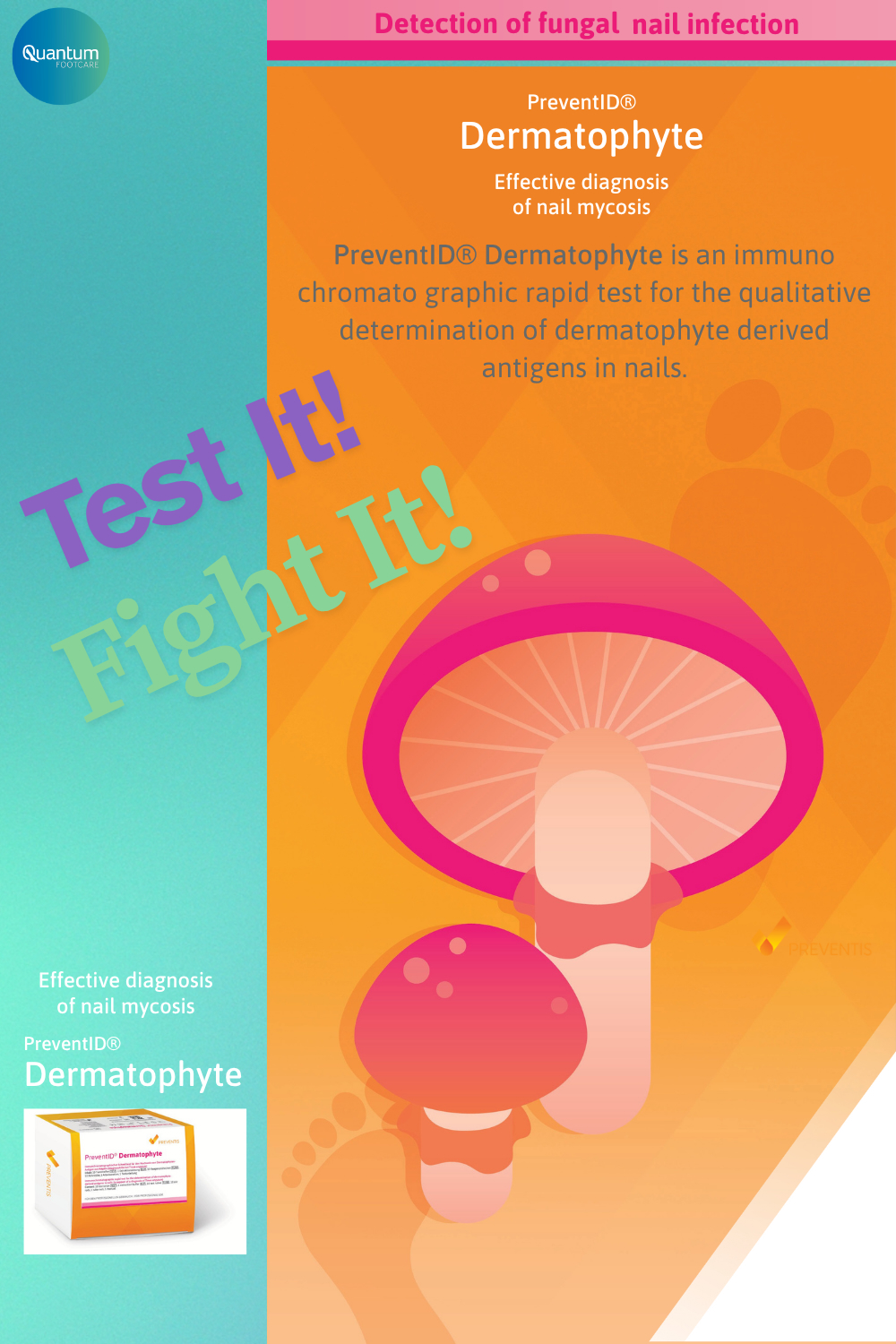
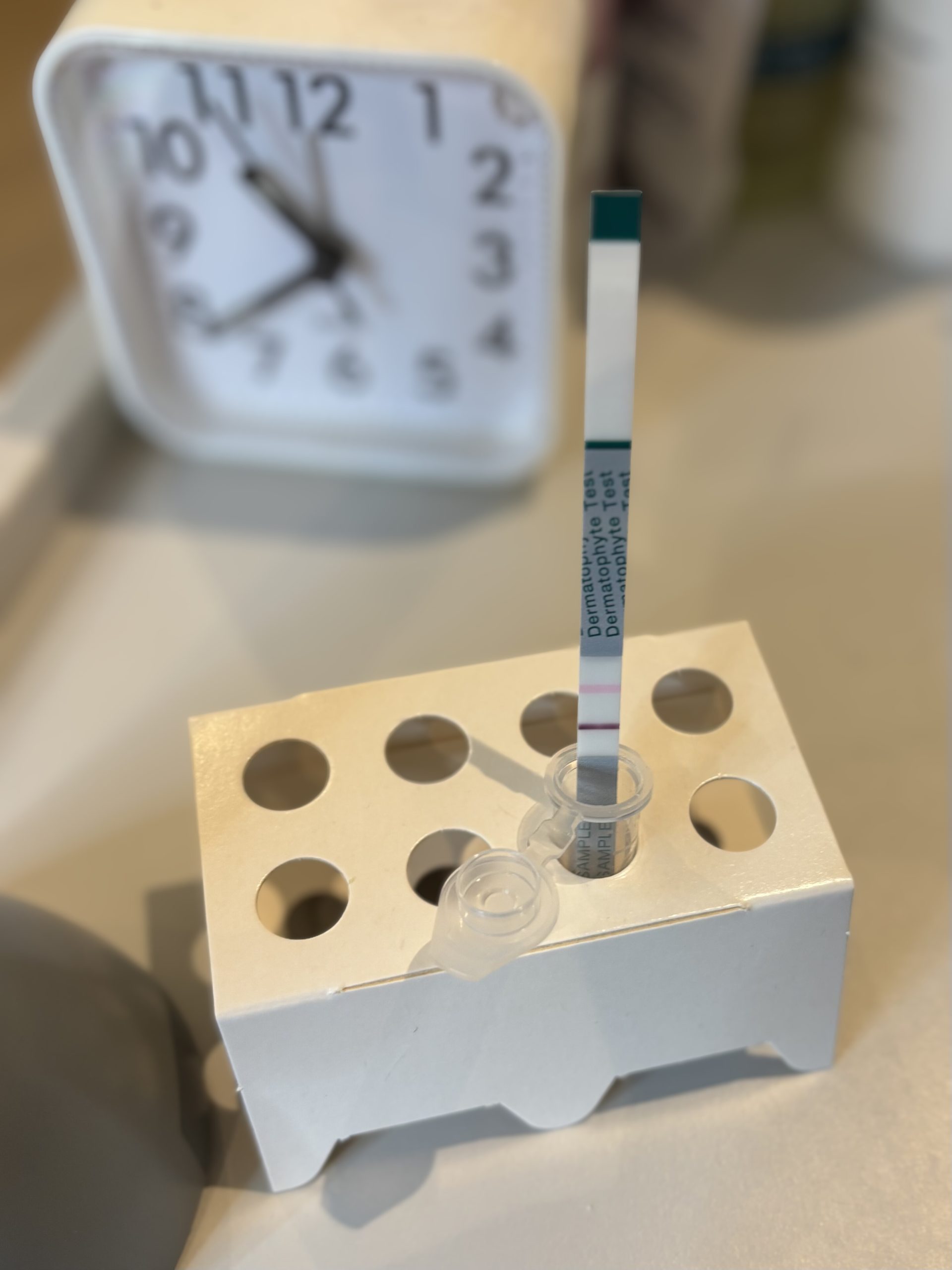
Before starting treatment, testing helps confirm whether a dermatophyte fungal infection is present. Accurate diagnosis ensures the correct management plan is chosen and avoids unnecessary or ineffective treatment.
Positive fungal test showing defined red and pink line
A positive dermatophyte test shows a clear control line and a second coloured line, confirming the presence of fungal organisms. This allows treatment to be targeted with greater confidence and clarity.
The Foundation: Reducing Nail Thickness
One of the most important parts of treatment is careful nail reduction.
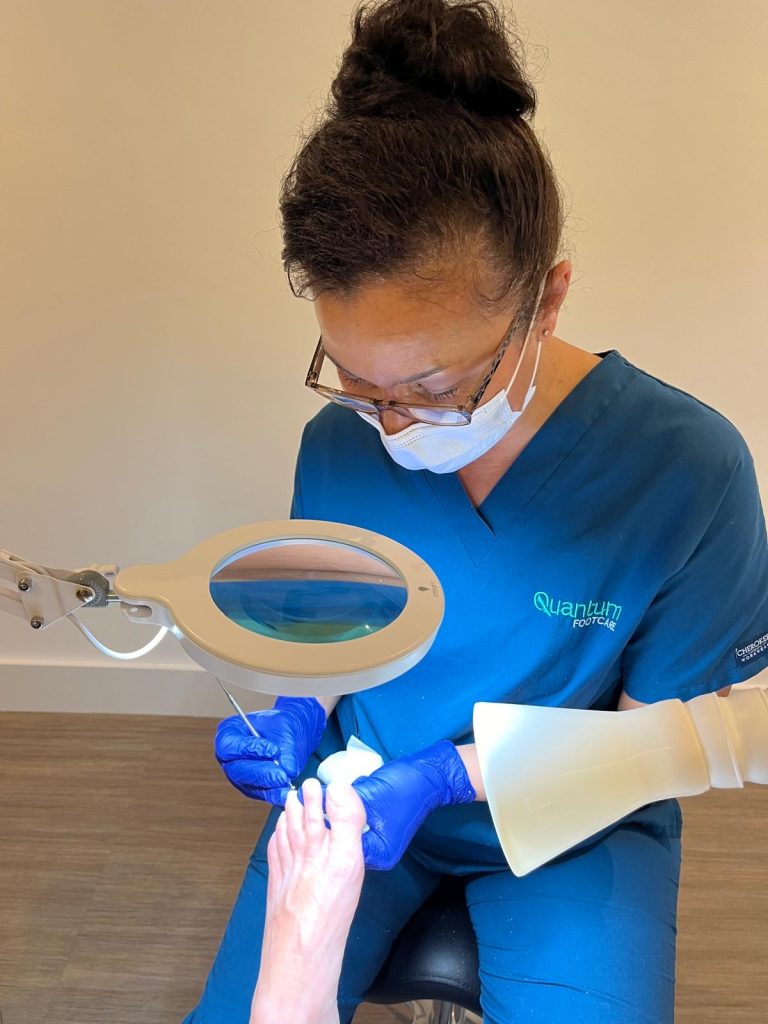
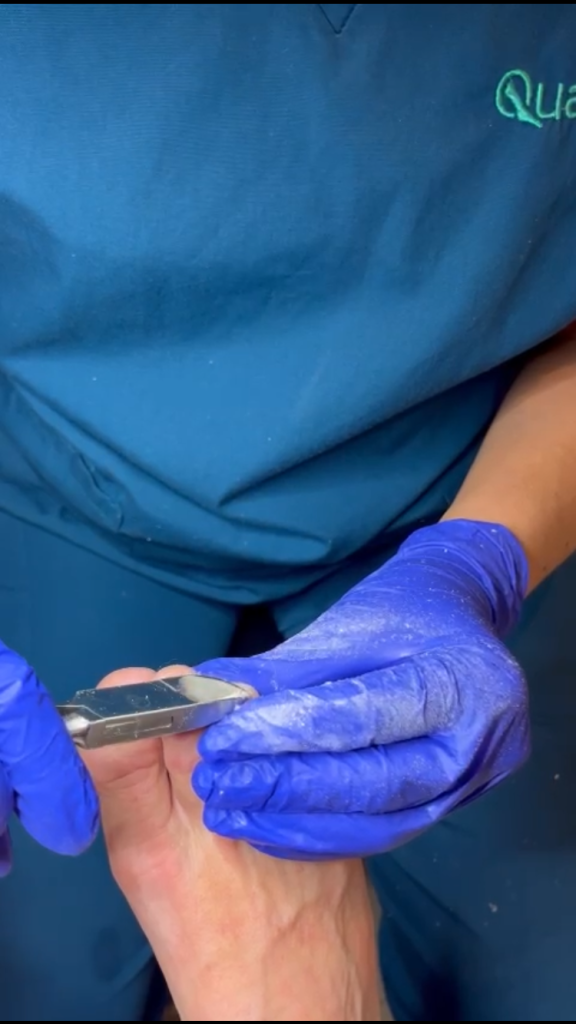
Professional Nail Reduction
Careful reduction of thickened fungal nail is an essential part of treatment. Thinning the nail plate improves comfort in footwear and allows topical treatments to reach the affected area more effectively. Reducing excess thickness also lowers fungal load and supports healthier regrowth over time.
Thinning the nail:
- Reduces fungal load
- Improves penetration of topical treatments
- Relieves pressure in footwear
- Makes the nail easier to manage
This step alone often makes a visible difference.
Supporting Nail Recovery with Conditioning
Long-standing fungal infection leaves nails brittle, dehydrated and weak.
Even after the infection is controlled, the nail may remain fragile.
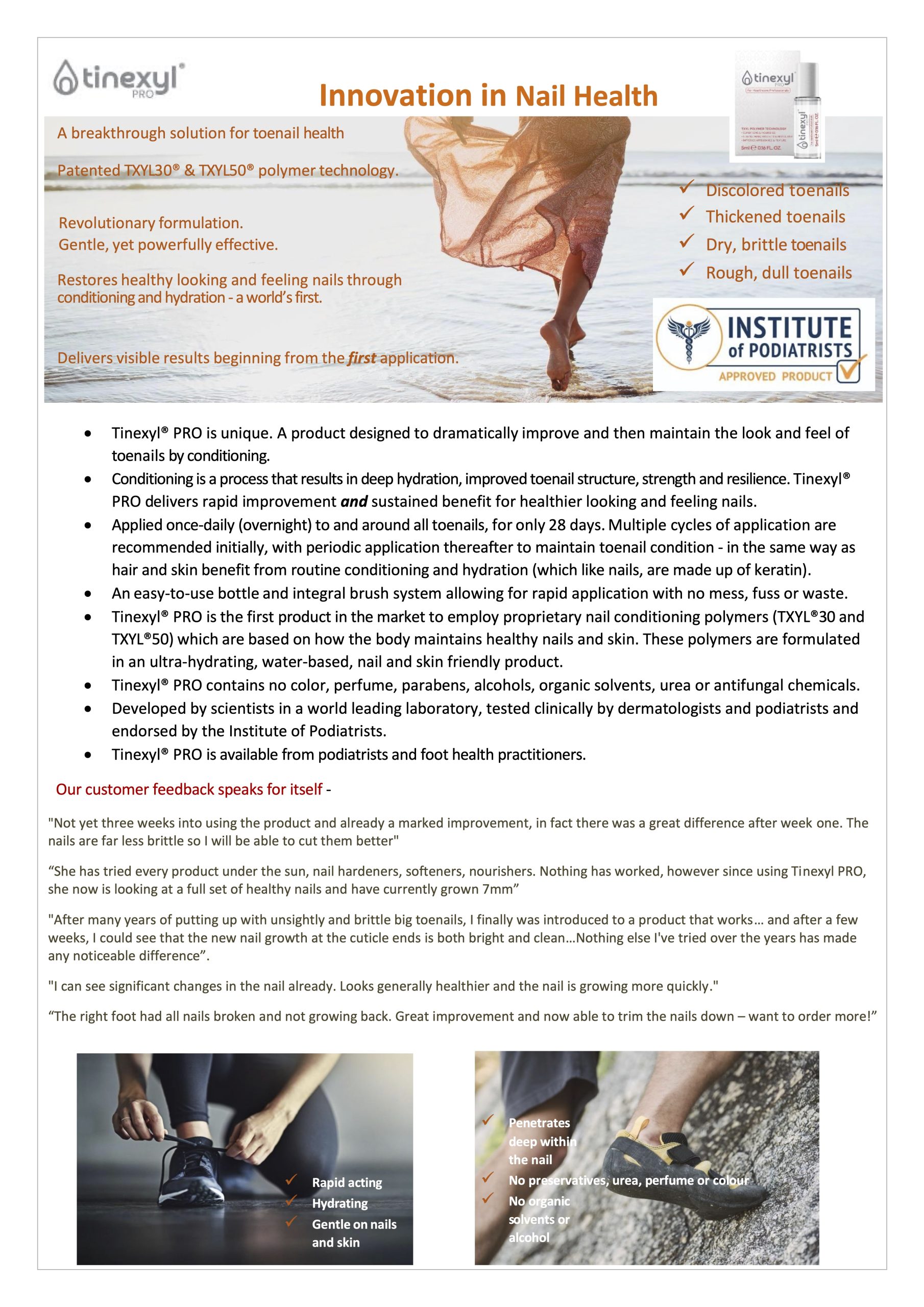
This is where Tinexyl® PRO can support recovery.
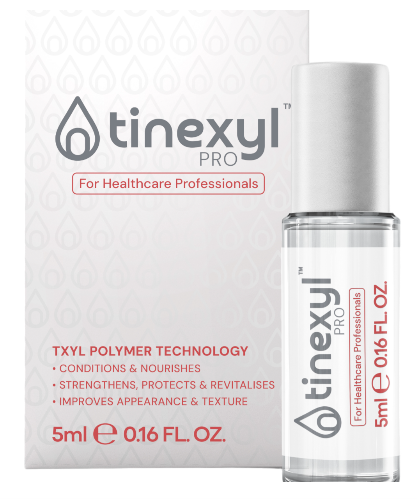
Tinexyl® PRO nail conditioning solution
Tinexyl® PROis a nail conditioning formulation used to support recovery in damaged or brittle nails. While antifungal management addresses infection, conditioning helps improve hydration, flexibility and keratin strength, creating a healthier environment for new nail growth.
It is not an antifungal medication.
It is a nail conditioning treatment designed to:
- Deeply hydrate
- Improve flexibility
- Strengthen keratin structure
- Improve overall appearance
Used alongside antifungal management, it helps create a healthier environment for new nail growth.
Toenails grow slowly — so improvement happens gradually from the base upward.
A clearer section near the cuticle is usually the first sign that things are moving in the right direction.
What About Laser Therapy?
MLS® Laser Therapy can support circulation around the nail unit.


MLS® Laser Therapy is used as part of a structured programme to support the nail’s recovery environment. By enhancing local circulation around the nail unit, it helps optimise the conditions needed for healthier keratin production and gradual regrowth.
Improved blood flow helps the nail matrix — the area that produces new nail — function more efficiently.
MLS® Laser Therapy does not replace antifungal treatment or nail reduction.
It supports the recovery process.
For recurrent or stubborn cases, combining reduction, conditioning and laser stimulation often gives more consistent outcomes than isolated treatments alone.
Is There a Faster Option?
Many patients ask:
“What kills toenail fungus instantly?”
Unfortunately, safe treatment doesn’t work that way.
For more widespread infection, oral terbinafine may be considered. It works through the bloodstream and can be very effective when appropriate.
However, not everyone needs tablets. Many cases respond well to structured conservative care.
The right choice depends on the severity, your medical history and personal preference.
The Structured Programme at Quantum Footcare
Treatment follows a clear pathway:
- Detailed clinical assessment
- Professional nail reduction
- Targeted antifungal management (if required)
- Nail conditioning support
- Laser support where appropriate
- Ongoing monitoring
This approach focuses on long-term improvement, not short-term cosmetic changes.
Preventing It from Coming Back
Once improvement begins, prevention becomes key.
Simple daily habits make a significant difference:
- Dry thoroughly between the toes
- Rotate footwear to allow shoes to air fully
- Avoid sharing nail tools
- Treat athlete’s foot early
- Use antifungal sprays in footwear if advised
- Choose breathable socks that reduce moisture build-up
Consistency matters more than intensity.
Why Sock Choice Matters
Fungal organisms thrive in warm, damp environments.
Bamboo socks (Happy Bits Bamboo Socks) can help by improving breathability and moisture control compared to many synthetic fabrics. Keeping feet drier throughout the day reduces the environment in which fungal organisms multiply.
Small changes in daily habits often make the biggest difference in long-term stability.
Final Thoughts
Fungal nail infection is rarely solved with one product or one visit.
It requires structure.
Patience.
And the right combination of treatments.
With proper management, healthier nail growth is possible — but it needs to be guided properly from the start.